Zero Trust SASE Everywhere: Featuring Forrester

  • Zscaler
Zero Trust SASE Everywhere: Featuring Forrester

Webinar

Your perimeter has multiplied. Users, branches, cloud workloads, and AI-driven applications are generating traffic that legacy network security was never built for. Security has become the dominant reason organizations adopt SASE, reshaping how teams evaluate vendors and plan for what comes next. A year after the Forrester Wave separated true SASE platforms from stitched-together offerings, the market is moving again, and the gap between platform leaders and the rest is widening. Forrester Principal Analyst Andre Kindness, author of the SASE Wave, sits down with Zscaler's Matt De Vincentis for an architecture-level conversation built for infrastructure and security leaders actively evaluating or deploying SASE.

What you'll learn:

  1. Why security has overtaken networking as the primary driver of SASE adoption
  2. What separates a real SASE platform from bundled point products behind a shared console
  3. How networking and security team convergence is changing vendor selection
  4. Where SASE is heading next, from campus and branch networks to unmanaged devices to AI

Speakers

  1. Scott Bekker Webinar Moderator Future B2B
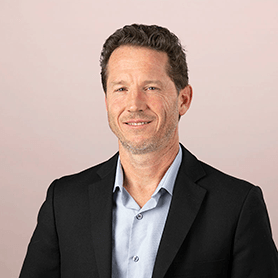
  2. Matt Vicentis SVP, Product Marketing Zscaler

  3. Andre Kindness Principle Analyst, Forrester
Full Transcript Video Hello, and welcome to Zero Trust SaaSy everywhere featuring Forrester. Today's webinar is sponsored by Zscaler and produced by Actual Tech Media. My name is Scott Becker with Actual Tech, and I'm excited to be your moderator for this webinar. So we've got a lot to cover today. Can't wait to get started. But first, I do wanna go over a few housekeeping details that are gonna help you get the most out of this session. So let's start out in the chat tab on the right hand side of your screen. A lot of you have already been saying hi in there. If your state or country seems underrepresented, you can correct that by giving us a greeting in there. That chat is for hellos like that, but, of course, you don't have to stop there. You could share your thoughts about today's topics, your reactions to the presentation, any insights that you have. Whatever you're excited about, chat is a good place for it. Quick reminder, the chat tab is also where you can go if you need to reach out to the actual tech media team in the unlikely event that you have any technical issues during the session. Now a browser refresh will dispose of a lot of types of tech gremlins. Another thing to try is the light mode option at the bottom of your screen. That limits some of your functionality, puts you on a slight delay, but it can really help if you're having connection problems, even local ones. And if none of those steps fixes a problem for you, my colleague, Irina, and I are standing by to help you out. We'll be monitoring that chat for any issues that you might have. Now the absolute best way to dive into the information we're gonna explore today is by asking your questions. So let's take two hops over in the tabs there to the q and a tab, make sure we all know where that's located. So while chat is for all those general thoughts and ideas and connections, the q and a area is where you should go to ask your specific questions, directly to our expert presenters. This this is the opportunity to make this event your own, ask questions that are pertinent to your environment, make sure that you're finding out the stuff that you need to find out. We will pass along all of those questions to the team from Zscaler for, for follow-up. Now another stop on our console tour today is the docs tab. We've got some great stuff to go along with the webinar, that I'd like to tell you about. There's more information about zero trust SASE in that first link. There's a Gartner Magic Quadrant report. There's a 2026 report from Zscaler's Threat Labs about phishing and initial access. There's also a video case study about, Hitachi Energy and how how they use Zscaler. So, be sure to to click around in those, in those docs and, and explore. Also, be aware, we have closed captioning available in 18 languages. If you hover over the lower part of your screen, you'll see that CC option as well as a drop down menu for languages. Now, finally, you may have noticed the price icon. We are, in fact, giving away an Amazon gift card worth $250 as a prize drawing at the end of our webinar. Of course, you must be in attendance for the duration of the live event to qualify for the prize, and you've got to meet the actual Tech Media prize terms and conditions, which you can also find in your docs tab. Okay. With that housekeeping out of the way, I'd really like to introduce our, expert speakers today. We've got a great lineup. We've got, from Zscaler, Matt Vicentes, who's senior vice president of product marketing. And from Forrester, we've got Andre Kindness, who's principal analyst there. So it's great to have them both here for this presentation. I'm gonna turn things over to, to Matt to get us started. Hello, and welcome to today's webinar on zero trust SASE in the AI era. If we haven't met before, my name is Matt Dimonzenes, and I'm the Senior Vice President of Product Marketing here at Zscaler. And we have a very special guest joining us today, Andre Kynas. He's a Principal Analyst at Forrester covering enterprise networking and SASE, and he advises a lot of Fortune 500 clients on their network and security transformations. And he's also the lead author of the Forrester Wave for SASE Solutions. So, Andre, thanks so much for joining us here today. Oh, thank you very much. I appreciate it. Thanks, Matt, for leading this too. Absolutely. No. It's a pleasure. This is gonna be fun, Andre. So, you know, you and I were talking just recently. I think we did our first webinar together maybe thirteen years ago at this point, and a lot has happened since then. Of course, you know, back in the early twenty tens, it was all about cloud migration. And then, of course, the pandemic, you know, kind of raised this whole idea of remote work and hybrid work that that, fueled a lot of SaaS adoption. And now it's all about AI. Right? So, you know, from your perspective as you're talking to clients, what's driving interest in SaaS and and SaaS adoption right now? You know, surprisingly, not has… Not much has changed probably in the last three or four years. Even though AI is the really hot topic, fundamentally, the shift of the architecture around security is starting to, you know, causes a lot of organizations to take this very slow approach to it. So let me back up for a second. So we look really kinda sassy, came along, pandemic, but also because of SD WAN and the idea of, hey. I'm gonna… My remote sites are becoming super critical. I need, you know, five nines reliability, and I'm gonna start using augmenting with whatever resources. So Internet, DSL, satellite to, you know, to support these remote locations. But, you know, that kinda started changing the security paradigm and architecture requirements. And then, you know, COVID comes along and the pandemic and how you start to, dig into and use your resources really fundamentally changes what the organizations needed and kind of the VPN world of trying to shove a full company now that was only doing maybe one to even less percent of the workforce through VPN. You know, trying to shove those things, all those connections in and and then having this, you know, kind of open once you get into the data center, having this open area fundamentally require much, much more of a different environment. And then you kinda throw on this third piece of it is the rise, and you brought this up, the rise of cloud. But now we started seeing the disposition of, policies and data and information and and applications across public and SaaS environments and, you know, being able to access them just didn't make sense to kinda, a, you had to worry about security, but then, b, was kinda shoving everything back to a data center and x… And then back out just to access. So it just really didn't make any sense at all. And so you started seeing this, and, hey. Let's do maybe incorporate zero trust, you know, take things in a data center, you know, web security, gateways, firewalls. You know, why do we have to have that one location? Can now… Can we not push that closer to the user itself? Kinda zero trust idea of, you know, causing, you know, looking and seeing what based on policy, based on device, based end user, you know, at letting them access certain resources in that environment. Now when you start to do that, you change your firewalls, you change your security appliances, you know, your gateways. That in itself has been a huge architectural change in the security world. Networking, not so much. So, you know, in the last few years, that piece of it has been the the part of… That architectural change has really caused a lot of security organizations to slow down what they're trying to do and really look and see the right way. So even though AI has been important, that idea of moving things out to the cloud and trusting that cloud environment, how you're gonna connect to it, all those types of questions are really the major things still driving a lot… 99% of my conversations. You would think that, as a networking professional, analyst, as well as some of the caters to security side, I would have kind of a balance between networking and security clients calling in about SASE. Interesting enough, it's about 99% security side. The reason why… And I know I'm gonna get some hate mails on this one. SD WAN is kinda commoditized. It's not that exciting anymore itself. There's not really huge architectural change on that. But when we think about the security side, I still… A lot of it's new. It's for a lot of organizations. We see maybe… Surprisingly, only about 20% of medium large enterprises out there have had fully deployed SaaS and using it six months or more. So in production, I'm not saying investigating it, rolling it out. So still lots of unknowns and and and because of being a conservative organization, they still worry about the ability to serve it and do the right thing and and change this environment itself. So that's… I would say that's consistently most of my conversations with with clients in the last eighteen to two years. Nothing too much is changing. Maybe a little AI on chat GPT and DLP stuff, but, still very much, you know, is is this the right way to go and who's… Which architecture and things like that is the top questions. Yeah. It's really interesting, Andre. Like, there's this new set of challenges around AI, like you said, you know, how do you control access to Gen AI, and and how do you ensure, you know, data loss prevention and all of those sorts of things. So there's sort of like a new set of emerging challenges. But to your point, the existing challenges that organizations have had for a decade or more of, you know, all of these different point products and disparate tools and and how do you converge them onto a single SaaSy platform? They still exist, right? So there's like new challenges as well as the old ones. And I don't know about you, but it's still quite shocking to me the number of organizations that still have VPN deployed as the primary way to connect remote users into the organization, the primary way to connect branch offices together, whether it's a site to site VPN or MPLS or something like that. You know, we've seen, I think, a lot of recent vulnerabilities being discovered in VPN concentrators and appliances. It's shocking to me that, we still haven't moved away from that entirely as an industry. But then you add on add on AI and some of those, new emerging pieces and, yeah, clearly, there's still a lot of interest and demand in SASE and, for both old and new reasons, I suppose. Yeah. Well, it's sometimes hard to believe that you can get, you know, things like CASB and SWIG and DLP and ZTNA to really, you know, really… You can really buy that from one company and all work well. So that's, you know, part of that mentality is, is it… You know, and then you fire… Firewalls of service that, you know, clients are really asking, is that is that possible? Is it really working? Is it, you know, as easy as, you know, I hear about it out there? And so those those are really a lot of aspects of the struggle to, you know, adopt SASE and and believe in it is probably because they got burned in the past for other disparate… Disconnect discrete solutions that didn't work together. Yeah. For sure. And we've kind of seen this here at Zscaler as well. Right? Like, I think in the early days of SASE, the journey was typically, you know, deploying something like ZIA on the secure gateway side with ZPA for the ZTNA side. And then, you know, that would add other pieces over time, but now we're seeing more and more customers kind of adopting all of the platform at at once. And so, you know, we we call that at Zscaler zero trust SaaS everywhere, which is just this notion of all of that converging on a single platform, a single management console, unified policy, all those sorts of things. And we're seeing, more and more customers kind of converging all of that at once rather than taking the piecemeal approach, which I think was maybe more typical in, you know, 2010… Sorry, 2020, 2021, early days of, of SaaS. I got my deck grades wrong there. But, early twenty twenties, I think it was more piecemeal. We started to see more full platform SASE adoption now on that single vendor approach. Sure. Yep. Agree. So along with, you know, the technology and kind of architectural shifts, Andre, like the, you know, network and security capabilities certainly are converging, but also the teams that operate those things that have, you know, in the past maybe been distinctly separate. You know, network teams and security teams often were in their own silos and not necessarily working, with each other very closely. How do you think, that may need to change and how should organisations think about the way they, you know, need to evolve their organisations and potentially evaluate vendors and platforms? Yeah. You know, I'm not really a big marketing person because I did work at some networking vendors, probably a good ten to fifteen years before joining here. So I'm a little bit more negative Neli about technology, but I… Sassy of things I've covered over the last fifteen years, I'm really super excited about. It's one of the few ones that it seems like it's this catalyst to making the networking security teams work together. You know, historically, both teams thing along with not just each other, but other teams as well. Right? So for a variety of reasons. I swear I… Back to my thing about who's giving me calls and even before that, But both teams are on the call, you know, and both teams are working together. It seems like SaaS is allowing or maybe the forcing function to make these teams work together. And it's cordial too. It's not, you know, as much finger pointing. I think because the technology is changing or the technology is… And especially platforms has allowed them to access the information, allows them to see the same thing. And, where we are far enough along is a very rich set of features both on a networking and security side from a lot of solutions. And so, you know, the the idea is that choosing one platform or another or choosing one thing over another, they're not giving things up like we saw in the past. We saw… And you brought this up about kinda that Some of the networking team may have gone out and bought SD WAN and then another one bought z t and a s s c separately. We're starting to see kind of them in in brownfield environments of one bot, one or the other. Now they're having calls with me about, like, who's… We wanna head to one platform and realize that, there's a lot more benefits around it. We wanna work together as a team. Maybe the networking team manages it and the security team sets the policies or maybe that they they work together in a smaller organization as a single unit. You know, whatever the case may be, we start to see in, like, brownfield environments where they… They're looking to have the the same thing. They see a lot of value around it. And even in Greenfield, surprisingly, when they're moving off VPNs, which is a lot of conversations I have still. I mean, like, my point was almost 80% organizations are still making that transition that, they are they are getting on the calls. They are working together. They're setting their policies around it. Interesting thing, I think what what we don't talk about in this industry much, there's a third element in this, and this is the business side. Because now you're starting as a networking and security looking at particular traffic and, you know, and and applications and who can access it and where and how. Remember all the policies I talked about. But to do that, you know, you gotta talk to the business and and prioritize and decide from a trust level, from a a network priority level what's more important. And they have to work together as a team, and then they approach the business as a… It's it's like a triangle working together to figure out each one of these applications. And they might be totally different with health care, the apps you're using versus, you know, if you're like a retailer, you know, is mobile point of service more important? Is is, you know, doing a demo of, like, say, I'm at Best Buy, and I'm I'm doing a smart home demo, and I'm streaming things on. Is that more important? Or is serving a customer at the Geek Squad counter more important than downloading an update to someone's laptop? These are very deep conversations that technology teams as a as a unit, even working together, can't do alone. They need to talk to the business. And so now, interesting enough, it's not just security networking. I think it's fantastic because it's it's pivoting network and security as a as a business asset and saying that, you know, these these are things that we need to look at, prioritize, and and worry about the most. And then these are least point because everything's finite when we think about resources. So, there's definitely this seismic shift on what's occurring from organizational standpoint as well as responsibilities as well as as… And even even I've seen manufacturing security networking teams report to a manufacturing site as opposed to to the overall CTO of the business itself because now they have the metrics around the manufacturing site itself. Very interesting things happening in the… In this world, and I I love it. I think it's long overdue, to be honest with you, Matt. Yeah. That's fascinating, Andre. So we… You know, you spoke about… Or we touched on it a little bit, but, you you know, where do you see this going wrong? Like, what is… You know, what are some of the, examples of where you've seen organizations kinda get this wrong when they're trying to bring these teams together or converge this infrastructure? Like, you know, what are the the, words of warning or or advice you can give, other people who are joining us today? Yeah. First is, this is… We flipped the tech side. A lot of times, just not having a good visibility, observability, understanding all the applications of traffic going and what that is and not really catalog. That is the biggest piece of it of… Or is it… That's understanding all the application traffic and the policies need to be around it. A lot of times, people have no idea what's being funneled in and out of the remote locations or what's being used by the business or what's critical. So I would say that's a long conversation between the security networking and the and the business itself. When it comes to organizations and working together, a lot of time, it's just, you know, things don't work well when when they keep it into their siloed domains and don't believe that in a lot of finger pointing and just don't have that trust level. And that sometimes is hard to overcome. We typically will see it has to be a strong VP or CTO to kinda change that underlying current and and try to make these teams work together and develop kind of a trust level. So you're not gonna have a good experience rolling out. If if you take it pieces or if you try to build or you do a platform, if you don't have a good communication between the teams, you don't have good good, metrics around it, good kind of strategy where you wanna go and the teams that work together as a as a cohesive team. Doesn't mean that, everybody's got equal amounts, but you just kinda set the hierarchy between it. If you don't have some of that happening, then for sure your rollout is gonna be atrocious at best. You're not… You probably won't use 90% of the features, and that's the whole point of kinda changing things over. I find sometimes some of the SaaS deployments are not really SaaS, even SD WAN. Some of the things I see out there is some crazy stuff for the amount of money that's being paid is just obnoxious. Yeah. Yeah. Well, let's bounce off that. Actually, this is a nice tie in to the next question that I had queued up for you, and that's around… You know, there there are multiple ways to do SaaS, right? Like there's the single vendor approach, multi vendor approach. You know, in your mind, what kind of separates a real SaaS platform from, let's say, just like a bundle of point products that are kind of loosely coupled together? Let's let's dive into that. Yeah. So just everybody to understand where I'm coming from that I'm not some, you know, marketing shill. I used to be a multi vendor networking person, so I believe that multi vendors was the way to go now. And surprisingly, it's mostly because of AI on the background, you know, helping the environment. But I've shifted to where the components itself, really is not… That's not where the decision making should be at. It should be the system or the platform. And the reason why is when we think about in particular, when I… This is when I developed the the wave itself was there were 20 some vendors out there claiming to have SASE. But I started realizing and talking to talking to customers and even working and kinda looking at the environments itself. When you have kinda components that don't work together like a platform, you enter data twice. You're gonna make a mistake. That opens up security holes, increases, you know, operational efficiencies in itself. So I started seeing the value of, you know, SD WAN, SSE, and ZTNA coming from different areas. Not as strong, now. In the past, that was… Didn't matter as much, but now I I pushed clients towards kind of this platform idea. Not idea. So hold on. So some vendors will say, hey. I have a platform, and I have these two components. And then the way a console will open up the other console, and that's the platform. And and maybe the GUI interface looks very similar. It's… You see that more often than that… Not now. But you're still entering data twice. You're still potentially seeing data in different ways, and that causes discussion errors within trying to solve a problem. You're trying to dig into two systems, monitoring visibility. Observability becomes very different from these environments, and and troubleshooting extends itself. So so even the APIs of sharing information don't… Doesn't work that well. Where you really start to see, and this is what we did with the wave, is are there things where, security networking team can enter the council, see things by their… You know, customize it, but they're seeing the same thing. And they're able to, you know, change roles and policies within that environment and really kinda have a single platform that's got sort of like a single data lake in this environment. It doesn't have to be, but, you know, that's more of a consistent area, single interface itself that allows, you know, maybe one team to operate it while the other one says policies, but being able to to set control points and everything within this environment. So kind of that shift. It's very important because when I did the wave, there was only eight vendors that claimed to have that now. In my wave, you'll start to see this kind of breakout and what truly was that. But that makes a big difference, and you're starting… Even from a client perspective, the brownfields, they're actually heading that way anyways. They realize there's a value of having a single kind of platform where you don't have redundancy mistakes, security mistakes. When you wanna start to operate things in a much more efficient manner, you wanna have something to to look at a single tool itself. Let me also just say, you really need that for the AI piece. If you want AI to help, you can't have… This is what's happening as you say, AI for SD WAN and then AI for SSC, but they're not looking at it across the board. So when you're trying to troubleshoot or you're using AI to help you troubleshoot this area, it's not gonna work. You need kind of that single platform. So it… Whatever assistant you're using in the background has that visibility across and then correlate all this data in itself and help you, you know, ascertain the the challenges of someone connecting or low, poor, poor application experience due to latency or packet drops or the services poor in a particular pop site. Those are the things that why a platform or people are moving to a a platform itself. We just don't have time in to horse around and try to find problems anymore in this kind of digital age. Yeah. I think this is where at Zscaler here, we're very aligned to your point of view on this, Andre, and this need for this single converged platform rather than the collection of point products. You know, I think this is where the, marketing teams, if I can say it and follow my own sword a little bit here, the marketing teams across the vendor community, I think have done the SASE market a disservice because, you know, it's very easy to claim a quote unquote SASE platform. But for us here at Zscaler, at least, you know, for us, a platform is a single management console. It's unified policy, like a single policy engine. It's a single back end data lake. And we think that that is where the real value of SASE can be extracted, not this sort of bundling of point products. And, you know, an example of that, at least in our own architecture and infrastructure, is what we call our zAgent framework. We launched this at XenaFly earlier in the year. You saw that, Andre. You know, this is where we start to use agentic AI operations. And so where you can start to troubleshoot and resolve issues using natural language and, you know, you can ask a question like, why is Matt having trouble with his Zoom call? And, you know, it could be a security thing, could be a networking thing when you have that converged on one platform. You know, to your point earlier, that's where you can start to use agentic operations and and AI operations across the entire system. And we think that's where customers can extract a lot of the value from a a SaaSy architecture kind of transformation. Yeah. And, you know, one thing I want to bring up, interesting enough, by having that platform, and this is unsolicited in all the customer interviews I did with the wave, was the fact is having that platform and that visibility across the networking and the security and be able to tie those together, that was unsolicited. That was one of the top… Having observability and visibility across your traffic and people was the top thing that brought up, customers brought up surprisingly in the sense that they weren't expecting that benefit. So they almost got rid of some of their other monitoring tools in this environment because they had the richness of data that is coming through in this kind of single platform. And that was… To me, that was really nice because I've been a big monitoring person for a long time in a sense of data is critical to solving problems. And so to hear clients talk about that as it was one of the kinda cool aspects of doing this wave and talking to a variety of different types of, users out there. I also wanna point out that, SaaS isn't the only area that's, you know, kind of the components saying and why people want platforms. I've seen this on networking side, and I see this even on the data center side. If every… All the vendors in each one of those areas are talking about platform because that's what customers want. So it's not just a sassy arena. It's like customers are tired of cobbling things together and trying to make things work as as a whole too, Matt. I mean, it's a it's it's a overarching demand by customers in general, no matter the size. Yeah. Big part of our strategy and platform here is just that simplification of the architecture as well. Totally. So, Andre, we were talking about, you know, single vendor versus multi vendor, SaaSy approaches, different architectures there. I I think another interesting aspect is zero trust. Right? Like, we obviously at Zscaler believe strongly in the need for zero trust. That's why we deliver zero trust SaaS everywhere. That is the the core of our platform. You know, what's your point of view on the need for zero trust in SaaS? Well, it warms my heart because Forrester came up with zero trust many, many moons ago and, the godfather shout out to John Kinderbug for kicking this off and kinda creating the concept and idea behind it. So, you know, the idea… And originally, it kinda started in a data center where really at the time when John had come up with it, vendors had gone off on the micro segmentation piece of it. But I always believe that, you know, controlling that whatever VMware was just as important as controlling a device at the edge. And so having the ability to understand the device, understand the applications that needed to, who was doing it, and kind of putting policies around it was essential for organizations, you know, in this kind of cloud IoT world. And so there's a lot of solutions out there or not. There are solutions out there that claim to have SaaS, you know, all you're really doing is kind of VPN and still… And then getting past a firewall. So it's not really, you know, zero trust because you're still allowing willingness within the infrastructure itself. So, you know, pushing controls and decision making as close as possible to the device and even including IoT devices. And, you know, if we take a look at what just happened in France on the refrigeration side, we've seen this in casinos as well, a few years ago, that not just mobile devices, typical PCs need control points, but, you know, all way having those all way to the edge itself, even in the in the cloud and VPCs and VNets having, you know, control points. So zero trust for me, having security kinda intertwined to the DNA of the network is is fundamental and them two working together is, is something that, you know, Force has been pushing for a long time. Yeah. We're very aligned again to that at Zscaler here. And, you know, we we find that, again, many vendors will talk about zero trust, but on the SASE side, that generally only applies to their their users, how they, you know, apply zero trust to connect users to applications. But for us, again, it's all about zero trust SASE everywhere. That's extending those principles of zero trust, not just to users accessing applications, but to your branch offices, to your cloud workloads, you know, even IoT devices like you said. You know, if we think about traditional SD WAN, which, you know, is part of SASE, that's clearly not zero trust. That is, you know, connecting branches together without really applying zero trust policies. And so, yeah, we believe pretty strongly like you do in in the need for zero trust, and that's the foundation of of our SaaSy platform for sure. It's funny. I never thought… Actually, even though I came from the networking, that was SD WAN was my entrance into the SaaSy world was, I never thought SD WAN was gonna really take off because the problem was now we're, you know, you're opening up the access. And SD WAN is not about Internet. It was about increasing reliability at the sites, ultimately link… Active active active links, you know, using multiple resources for digitalization. But, you know, moving off of a dedicated line and having, you know, Internet access willy nilly, that was insane. The idea that we're gonna put firewalls everywhere as as the answer was not gonna be sustainable for most organizations. So I knew something else had to come along and and, I'm glad to see that ZTNA and ultimately SSC, you know, help… Is helping solve that issues. Yeah. Absolutely. I mean, the value in SD WAN was so obvious in the early days. Right? Like, to be able to Yeah. You know, improve the reliability with just a fraction of the of the cost that organisations were, you know, spending for their leased lines and all the rest. Like, the value is so clear. But now from a security perspective, especially as we think about frontier AI models and the ability for them to easily, you know, find vulnerabilities, exploit them, move laterally across the network, that risk of SD WAN without security controls. And we don't think that placing a firewall at every branch location or every hedge location is something that's manageable. So yeah, for us being able to extend zero trust policies from, you know, users and the SASE architecture all the way out to the branch with, you know, what we call our zero trust branch, we think that's really important in this world where it's it's all about stopping the the lateral movement of threats. Oh, exactly. Exactly. So, Andre, what's next? We know we've spoken a lot about what's come, before us here and how we got to this point, but what's next for Sassy from your perspective and the conversation you're having with clients? Yeah. I don't, I think there's so much as, you know, the potential. I think the start off with maybe, we brought up about IoT. You know, if we look at the market as a whole, that's not really that developed, you know, so Zscaler is further along in that compared to them, but we look at the market, a lot of them are not. The market itself hasn't really just with IoT. So how do you start to deal with that lateral within the manufacturing site, you know, what you deal with with, for refrigeration systems and and buildings and, you know, in retailers or even medical areas itself and and protect those things. So one is, you know, increase the richness and capabilities and sophistication around that. We… And then also even DLP. We've started to dabble that within the SaaS space, but compared to what the DLP vendors itself are doing, where I say we're in the tween years of it, but there's gonna be a build out of that capabilities. And maybe the DLP environment gets sucked into the SaaS. Ultimately, SaaS is where it's positioned is so much to grow in this area. And then, and then back to kind of the overall market itself, a lot of companies are not addressing VNets and v… VPCs in the cloud. So how do you treat them almost like a road office? You have the application or you have data sitting out within AWS or Azure. In a way, AWS or Azure or GCP treat secure networking is different between each of platforms. It's it's an ugly, ugly mess. You have to open up PowerShell to set ACLs and and Azure. Right? So you wanna have maybe a little bit more consistent policies to drive efficiency in that area. So it seems like SaaS is a great thing. I know it's… That's something Zscaler do… Does. But, you know, as overall market, that's a very underdeveloped area and something that's not recognized in general with with vendors. And, actually, even clients, I had to explain some of that going on in that area itself. I would also probably say, you know, the other thing is even SaaS security posture management is not… Is underdeveloped and could be taken from that market. So, that's another area that I could see being growing out for for the SaaS vendors itself. And then, you know, how does, NAC and how does local area controls play in in… Into it as well. So I know that's, makes my counterparts bristle on Net Forrester, but universal z and t and a or or how do you deal with, you know, access control with… Right at the wireless, Wi Fi ports or the or the switch port itself, integrating part of the policies of the overall system itself and now have two distinct discreet systems that just don't interact and cause a lot of headaches for the for the customer. So there's multiple areas that SaaS is gonna be evolving. It's nothing… The fact that we have still 20 some vendors says it's a very immature market. We still have a lot of growth, a lot changes happening, and so I I love it. But, there's a lot lot of confusion, and that's probably why they come to, analyst firms like ourselves. So a lot of changes will be coming. Yeah. So to play that back to you, Andre, it's sort of like to this point, you know, a lot of Sassy was about, how do you connect users to SaaS applications, the applications that they need, but you're sort of describing here how that now extends to connecting and securing in your your cloud workloads, your OT and IoT environments in, you know, factories and other sorts of locations and bring that onto that that single converged network and security architecture that that is really the the foundation of SASE. Yeah. Yeah. And I mean, I don't know if it's gonna extend it to be like… Which didn't seem to be growing. It… Or it's interesting. It's like a zero trust platform, but, you know, a bigger fabric of of consistent security policies is where we where we see this kinda going. What the name is? I don't know yet. But, definitely, a lot of changes happening. Absolutely. Alright, Andre. Let's wrap this up. If I'm… Kind of to summarize the conversation we've had here today, which has been fascinating, by the way. Thank you for for sharing your insights. You know, we spoke about how not all SaaS offerings are created equal and that, you know, you need to look for a truly integrated platform, not just a a bundle of point products. We spoke about how zero trust is really foundational to that and that now SaaS platforms are evolving to support, you know, cloud workloads to support IoT and OT devices, and that needs to be part of how you evaluate SaaS platforms. This has been an absolute pleasure, Andre. Thank you so much for sharing what you're hearing from your clients and from the market. This is why we value the the third party analyst perspective. You always keep us honest, and we really appreciate that. So thank you again for your time, Andre. Thank you, man. I really appreciate it. And thank you for joining us on today's webcast. If you're interested in learning more about SASE, please download the Forrester Wave for SASE solutions. We'll make it available for you to download free of charge. And if you'd like help on your journey to adopting SASE, please contact us here at Zscaler. We'd love to support you in that journey. Thank you. Alright. Well, thanks to Matt and Andre for that informative, presentation discussion. So before we get to the prize drawing, we've got one quick favor to ask of you all today. Arena's opening up a short survey that we'd really appreciate if you could all fill out. This is for those of us on the actual tech media team. We just wanna know how we're doing, what y'all like and don't like about our sessions. We really wanna make sure that we're meeting your needs, and the results of this survey are gonna affect how we deliver these events for you in the future. So we'll give you all just a minute to fill that out. While you're doing that, I do wanna mention a few things. Again, in the doc section, there were a bunch of great resources that I hope you had an opportunity to, to grab. But if not, you still got a minute to to do it. There's more information about that zero trust, SASE, on on a Zscaler page there. There's the Gartner Magic Quadrant report. There's the 2026 report from Zscaler's Threat Labs about phishing and initial access, and there's that video case study about Hitachi Energy. So be sure to open up those tabs here in in the last, last minute of the event too if you're interested in any of those resources. We have one more piece of business before we wrap up. That's the prize giveaway. And today's winner of a $250 Amazon gift card is Steve Cochran from Arkansas. So congratulations to Steve Cochran. As always, we'll be in touch about claiming your prize after the event. And with that, on behalf of the actual tech media team, I wanna thank Zscaler for making this event possible. And a big thank you to all of you for, taking time out of your day to join us here. It was great having you here for this actual tech media event. We look forward to seeing you again next time. Have a great rest of your day.

Please provide citations & attributions for any information you generate from this content, thank you.